
Printed materials are pieces you hold in your hand, and people spend more time with them than with an ad they scroll past in a few seconds.
That's exactly why they deserve careful preparation: choosing the paper and finishes, getting the colors right, and checking the files before printing.
01What materials you can order
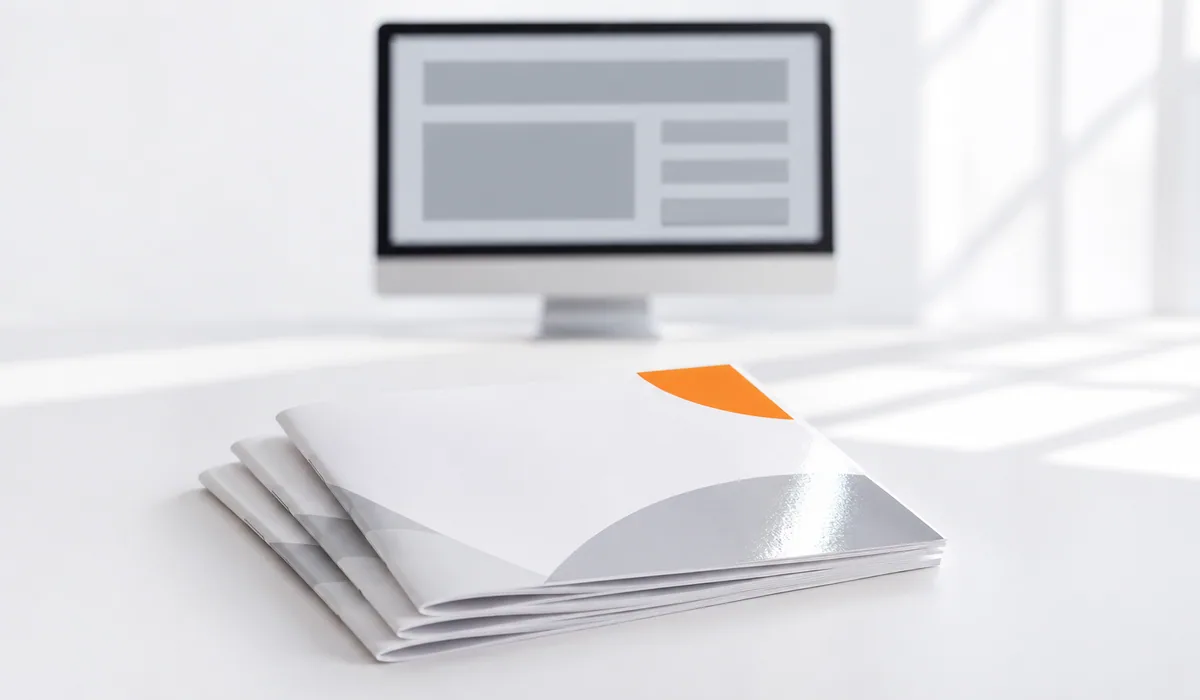
Stationery is usually the first step: business cards, letterheads, envelopes, notebooks, and branded office sets. Next come marketing materials: brochures, flyers, posters, banners, and direct mail campaigns.
For products, packaging design covers labels and boxes, including packaging made from sustainable materials. Books, magazines, catalogs, and annual reports fall under editorial design, where readability matters as much as looks. Billboards, signage, and trade show stands are large-format materials, designed to be seen from a distance.
02Finishes that change the impression
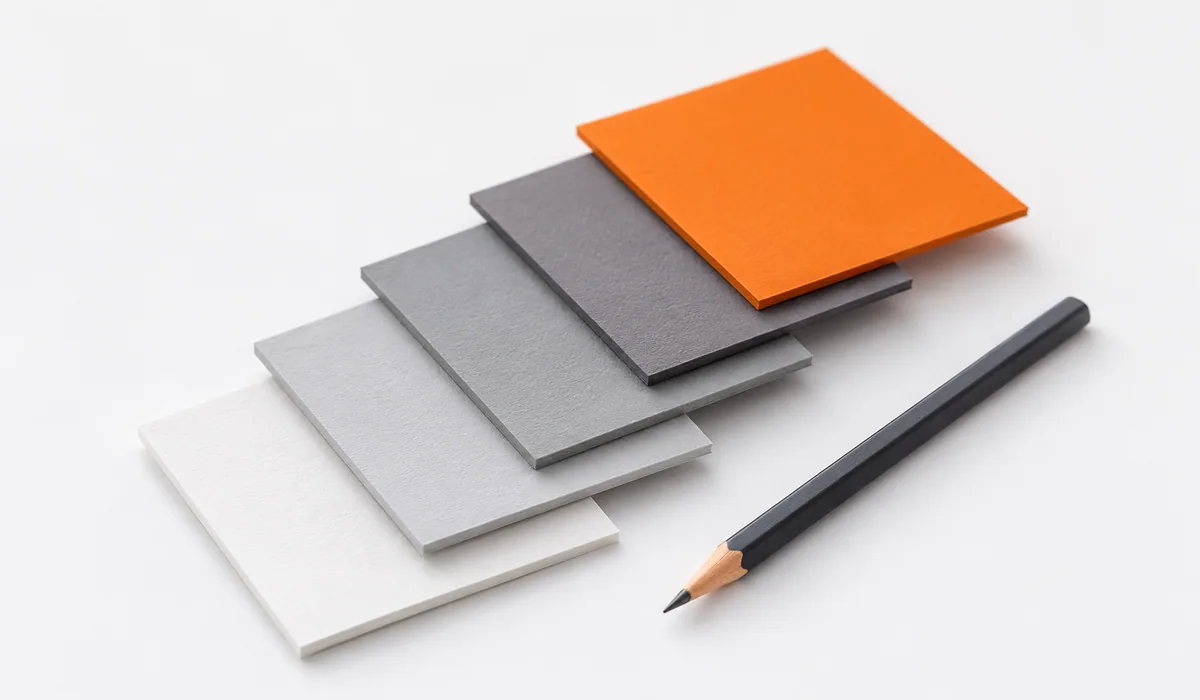
For business cards and other presentation materials, we can use premium finishes: spot UV varnish, foil, and embossing. For unusual shapes there's die cutting. The finish is chosen together with the paper and the varnish, because all three influence the final result.
03Colors: Pantone, CMYK, and spot colors
Color fidelity is handled in Pantone, CMYK, and spot colors. If you have a brand guide, it already contains the color formulas in CMYK, RGB, HEX, and Pantone, and printed materials start from them.
04Preparing files and the final proof
Print preparation and proofs are the stage where you catch the errors that would be costly after printing. We prepare print-ready files and work with trusted printers. We deliver the logo in vector formats (EPS, PDF), which can be enlarged without loss of quality, and images in high resolution.
You approve the final proof. If a printed piece has an error that was already in the approved final proof, the agency is no longer responsible for it. Before you approve it, read the texts carefully and check phone numbers and addresses.
05What's in use now
QR codes and augmented reality elements make printed materials interactive. Recycled paper and soy-based inks are options for anyone who wants more sustainable materials. Variable data printing allows each copy to be personalized, for example with the recipient's name in a direct mail campaign.
If you're preparing a printed piece, see the page about print design or send us your project details.